Vertical Production Cycle
|
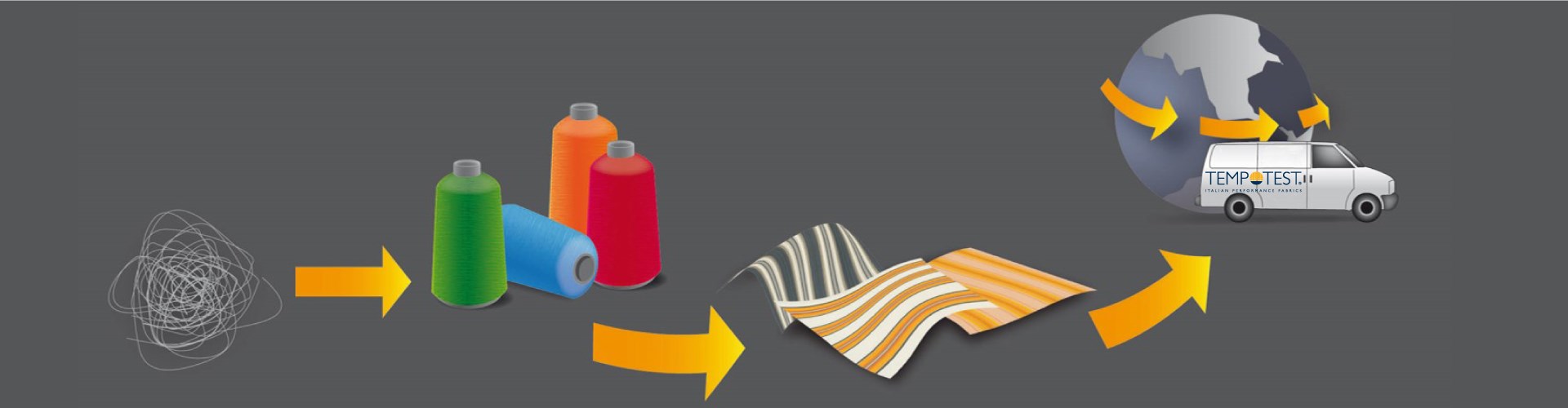
With more than 100 years of experience in the textile industry, Parà places strong emphasis on product quality throughout the key stages of its manufacturing process. |
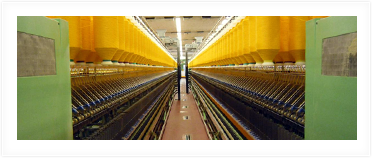
| SPINNING More than 15.000 kilograms of yarn are spun every day at Parà’s manufacturing facilities to supply weaving operations. Production departments dedicated to individual processing stages are organized to ensure process separation and minimize the risk of contamination between different fibers and colors. The latest-generation machinery, entirely Made in Italy, supports efficient production management and helps reduce energy consumption compared with previous technologies. |
 |
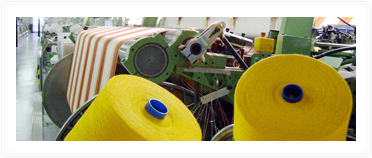 |
WEAVING Once the yarn cones reach the manufacturing facilities in Pontirolo Nuovo (BG) and Vigliano (BI), they are processed on dedicated warping machines to create the various fabric constructions and designs. Afterwards air-jet looms of last technology "made in Europe" pass the weft from one side to the other with a speed that reaches 900 combs per minute. The result is a fabric distinguished by high uniformity and consistent quality in the finished product. |
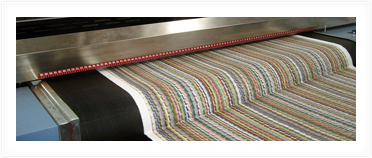
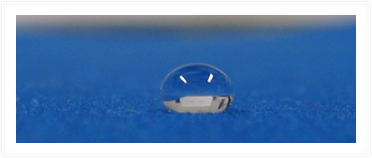
| PRINTING AND COATING A 24-color printing machine is complemented by industrial digital printers, enabling the efficient management of diverse and flexible production requirements. To complete its range of outdoor fabrics, Parà operates a coating line that provides products with waterproof properties required by specific market segments. |
 |
 |
FINISHING Parà’s manufacturing process includes a range of textile finishing operations. The fabrics produced undergo various finishing treatments designed to impart the required technical properties and achieve the desired material characteristics. These treatments are followed by quality control procedures carried out using advanced testing equipment, complemented by visual and manual inspections aimed at identifying any imperfections. |